
Auto News

Stay ahead of the curve with the latest announcements, industry shifts, and innovations from premium and exotic auto manufacturers worldwide. This includes covering new model debuts, future concept vehicles, major market trends, and technological breakthroughs that are shaping the future of high-performance driving and racing.

Road Trip Drag Challenges: Why the NHRA U.S. Nationals Remains King

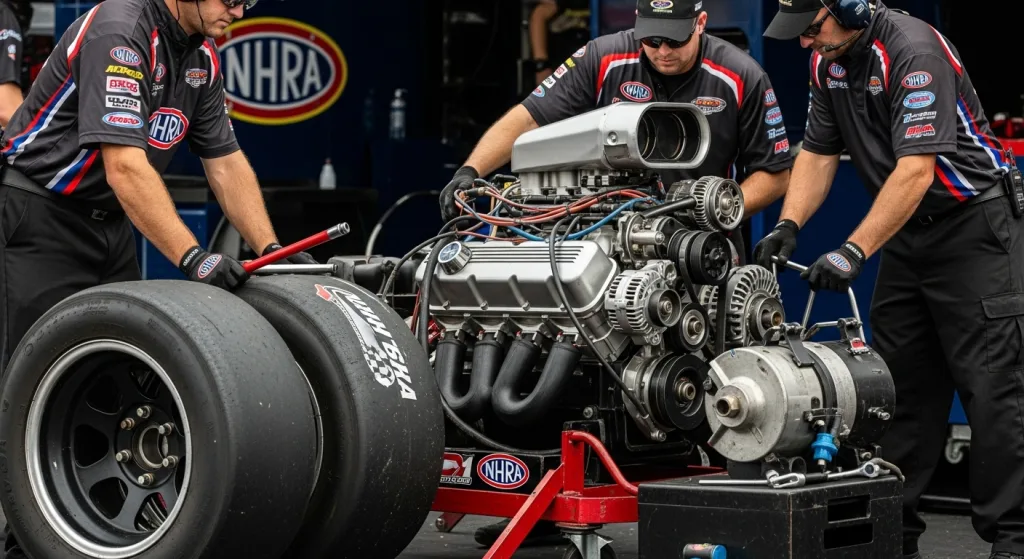
In the world of high-stakes, high-horsepower retas, few places carry the historical weight and sheer prestige of Indianapolis during Labor Day weekend. This is the home of «The Big Go,» the NHRA U.S. Nationals. While many casual events and unsanctioned street races grab headlines, the U.S. Nationals is the gold standard—a proving ground that draws not only the professional Top Fuel teams but also a massive contingent of exotic and street-legal performance cars seeking glory.

For the serious exotic car owner who tunes and races, participating in or even attending this event is a pilgrimage. It’s where history is made and where the culture of competitive speed is most deeply rooted.


The Unrivaled Prestige of «The Big Go»


First held in 1955, the NHRA U.S. Nationals quickly became the National Hot Rod Association’s most celebrated event. It’s often compared to the Indy 500 or the Daytona 500 within its sport, marking a place where winning grants instant, lifelong legendary status.

What makes it so significant for the exotic car community is the depth and breadth of the competition. Beyond the massive professional classes, the event hosts countless sportsman and bracket classes. This is where owners of street-driven supercars—from highly tuned twin-turbo Lamborghinis to modified Corvette Z06s and Porsche 911 Turbos—come to test their engineering prowess and driving skill against the best in the country. The sheer scale of the event, coupled with its historical importance, attracts the finest builders and drivers, making every class intensely competitive.


The Culture Surrounding the NHRA U.S. Nationals


The Drag racing culture at Indianapolis Raceway Park (IRP) during the Nationals is unlike any other. It is a five-day festival of speed, sound, and camaraderie.

  • The Pits: The spectacle is not limited to the track. Walking the sprawling pit area offers an unparalleled look at automotive excellence. You’ll find meticulously prepared Top Fuel dragsters alongside the latest, million-dollar hypercars, all sharing the same paddock space. For enthusiasts, it’s a giant, open-air garage and an educational experience.
  • The Stakes: While prize money is substantial in professional classes, for the exotic car owner competing in sportsman brackets, the real prize is the prestige of taking home the iconic NHRA «Wally» trophy. Winning a Wally at the NHRA U.S. Nationals is the ultimate validation of a car’s build and a driver’s skill.
  • The Lifestyle: The event is a social magnet, drawing exotic car clubs, collectors, and builders from across North America. It fosters a lifestyle defined by passion, meticulous maintenance, and the constant quest for a faster elapsed time.


Why Your Exotic Car Needs This Experience


If your blog promotes the thrill of exotic car retas, covering or participating in Major drag race events like this one is essential. It connects the localized retas scene with the global, historical context of motorsports.

The NHRA U.S. Nationals provides a unique backdrop to test the principles discussed in our other articles:

  • Car Analysis: Which hypercar platform proves most durable under the stress of five days of competitive runs?
  • Driving Tactics: Which drivers maintain the consistent 60-foot times needed to advance through elimination rounds?
  • Tuning Extremo: Which turbo configurations survive the high heat and extreme demand of multiple back-to-back runs?

In conclusion, «The Big Go» is more than a race; it is the annual benchmark for performance. For any exotic car enthusiast who believes their machine is the fastest, the NHRA U.S. Nationals is where they must prove it.
Hypercar Technology 2025: The Rise of Active Aero Systems

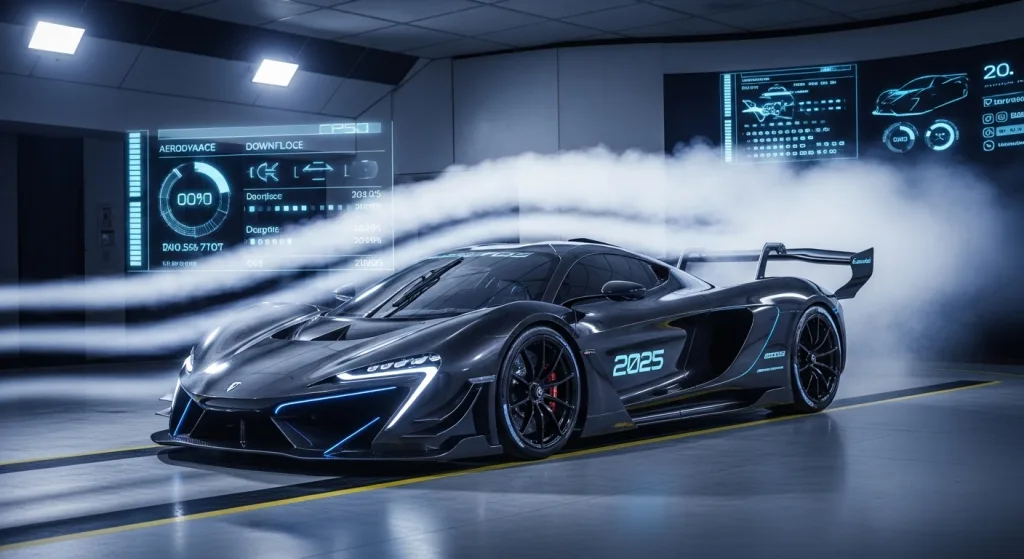
The era where extreme speed relied solely on engine power is over. Today’s hypercars are defined by their mastery of the air around them. As manufacturers push vehicles past the 250 mph (400 km/h) threshold, the difference between stability and disaster is managed by sophisticated computers adjusting movable wings, spoilers, and flaps in real-time. This technological evolution is the Active Aero Systems revolution, and it is fundamentally changing the physics of high-performance driving.


The Duel Against Drag and Downforce


Every hypercar designer faces a perpetual trade-off: minimizing aerodynamic drag to achieve maximum top speed versus maximizing downforce to ensure stability and cornering grip. Active Aero Systems provide the elegant solution to this paradox.

These systems are complex networks of sensors, actuators, and motors managed by the vehicle’s central control unit. Their primary function is to continuously optimize the car’s aerodynamic profile based on the driver’s inputs and vehicle speed.

For example, when a car is accelerating on a long straight, the system puts the car into a low-drag mode (or «DRS» mode, borrowing a concept from Formula 1). The rear wing flattens, and front flaps may close, allowing the vehicle to punch through the air with minimal resistance to maximize velocity.

The moment the driver hits the brakes or steers into a high-speed corner, the system instantly switches to a high-downforce mode. The rear wing pivots sharply to act as an air brake and maximize downforce, pushing the tires harder into the pavement to maintain traction and shorten braking distances.


The Role of Active Aero Systems in Exotic Car Retas


While drag races are typically judged on a straight line, the efficiency provided by Active Aero Systems contributes directly to performance in two key areas:


1. Max Speed and Stability in the Final Stretch


The ability to dynamically flatten the wing reduces drag significantly in the final portion of the quarter-mile and, especially, in half-mile or full-mile retas. This allows the car to reach a higher terminal velocity (trap speed) at the finish line. At over 180 mph, a well-managed aerodynamic profile is more beneficial than an extra 50 horsepower.


2. Post-Race Braking and Safety


Once the finish line is crossed, the car still carries immense kinetic energy. The instantaneous deployment of the rear wing as an air brake is a vital safety feature. This dramatic increase in drag helps scrub off huge amounts of speed very quickly, an essential capability for exotic cars racing on shorter strips or closed roads.


Innovators in Active Aero Systems for 2025


Several manufacturers are pushing the envelope with innovative Active Aero Systems.

  • Aston Martin Valhalla: Expected to feature complex underbody aerodynamics and multi-stage active wings that produce massive downforce while maintaining an accessible road profile.
  • McLaren: Continues to refine its system, focusing on seamless integration between aerodynamics and its hydraulic suspension to create a perfectly balanced platform for high-speed use.
  • Bugatti: Uses large, single-piece air brakes that pivot to manage drag, a testament to maximizing downforce at astronomical speeds.

As Active Aero Systems become standard in the hypercar segment, they represent a clear trend: the next generation of speed will be won not only by those who generate the most power but by those who can control the forces of nature most effectively.